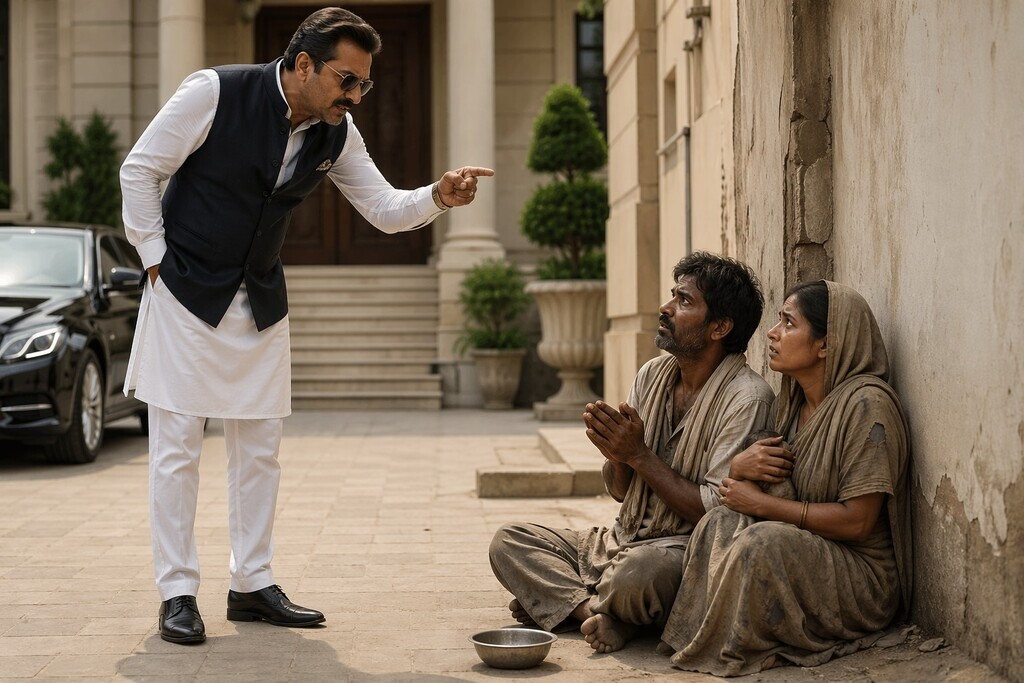
You shall be Perfect or Don’t Judge
The theme of judging and discerning others runs throughout the Scripture, so much so that entire books have been devoted to exploring it. What follows here is only a fragment, just one thin layer of a vast and complex subject. It offers a surface-level glimpse into the practice of discernment and the weighty matter of passing judgment on others.
First, judging others is a task best left for God. The psalmist reminds us in Psalm 98:9: 'He is coming to judge the earth; He will judge the world with righteousness and the people with fairness.’
Often, our own vision is clouded by personal baggage, making it difficult to see our brothers clearly. Jesus illustrated some of the complications of discernment in one of his parables, offering some insight into the question of who is truly qualified to judge.
In Matthew 13:24–43, He tells the story of the wheat and the weeds, and let’s read this parable before explaining how I believe it portrays the responsibility of discernment.
“The kingdom of heaven is like someone who planted good seed in his field. While people were sleeping, an enemy came and planted weeds among the wheat and went away. When the stalks sprouted and bore grain, then the weeds also appeared. The servants of the landowner came and said to him, ‘Master, didn’t you plant good seed in your field? Then how is it that it has weeds?’ “‘An enemy has done this,’ he answered. The servants said to him, ‘Do you want us to go and gather them?’ But the landowner said, ‘No, because if you gather the weeds, you’ll pull up the wheat along with them. Let both grow side by side until the harvest. And at harvesttime I’ll say to the harvesters, ‘First gather the weeds and tie them together in bundles to be burned. But bring the wheat into my barn.”’
My Take
In this parable, the good seed, representing God’s Word, is sown into the field, which symbolizes the world. As it begins to grow, an enemy, the devil, secretly scatters bad seed, which reflects the false teachings and deception of the Pharisees.
When the servants, representing the disciples, notice the weeds, symbolizing sinners or those led astray, they ask the landowner, who represents Jesus, if they should pull them out.
The landowner cautions them not to uproot the weeds; in doing so they may inadvertently uproot the wheat, symbolizing true believers. Sometimes it’s very difficult to discern the good from the bad, but Jesus, with the remarkable wisdom in his parables, chose an image that reflects reality:
In the wheat fields of Judea, the wheat and weeds often resemble one another, and their roots are intertwined beneath the soil, making separation nearly impossible. Surely, this aspect was not overlooked when he told the story.
The landowner instructs the servants to wait until the time of the harvest, when he himself will make the final judgment and separate the wheat from the weeds. “Let them grow side by side until the harvest“
The lesson seems clear: discerning the true state of a person’s heart is not a task entrusted to human judgment. Hearts can change, repentance can occur, and appearances can be deceiving. Jesus is explaining to his disciples that they are not yet qualified to make such ultimate determinations. This type of judgment belongs to God alone, who will separate the righteous from the unrighteous, at His perfect timing.
Part One
Judging others is something Scripture warns us against. Jesus plainly says in Matthew 7:1: “Do not judge, or you too will be judged.”
Yet His teaching may be a little more nuanced than a simple prohibition. As the chapter continues, He illustrates the conditions under which discernment might be exercised, and the posture required before any analysis of another could possibly occur.
‘You have heard that it was said, ‘You shall love your neighbor and hate your enemy.’ But I say to you, love your enemies and pray for those who persecute you, so that you may prove yourselves to be sons of your Father who is in heaven; for He causes His sun to rise on the evil and the good, and sends rain on the righteous and the unrighteous. For if you love those who love you, what reward do you have? Even the tax collectors, do they not do the same? And if you greet only your brothers and sisters, what more are you doing than others? Even the Gentiles, do they not do the same? Therefore, you shall be perfect, as your heavenly Father is perfect.’ (Matthew 5:43-48)
Love was always the foundation and the main ingredient for a recipe for a perfect heart.
In Matthew 7:3–5, Jesus asks: “Why do you look at the speck in your brother’s eye, but fail to notice the log in your own eye? How can you say to your brother, ‘Let me take the speck out of your eye,’ when the log is in your own eye? You hypocrite, first remove the log from your own eye, and then you will see clearly to remove the speck from your brother’s eye.”
Get your heart straight first, then your vision can be clear, that’s what he’s saying you need to do, before you even think about judging. There is a Greek word used to describe the sentiment that the heart requires to give your eyes the sight you need to see the speck in your brother’s eye.
The word perfect has been translated from the Greek word (teleios), which conveys a sense of completeness, also encompassing the meaning of maturity and attributes of moral character.
So it seems what Jesus is saying unless one sees with eyes guided by a (teleios) heart, they’re in no position to evaluate another. Jesus is teaching that only when we have dealt with our own faults and grown into spiritual maturity can we begin to discern rightly.
Until then, judgment belongs to God alone.
He is calling us to a life immersed in compassion and mercy, marked by forgiveness, humility and love. When our hearts are complete (teleios), these traits then dwell within it and when the heart is mature (teleios), the eyes will see clearly. These are not optional virtues but the very principles that must shape our being.
So then the question becomes: when you face a situation that requires your evaluation or discernment, are mercy and compassion the first emotions that rise in your heart? Or do anxiety and self-interest take precedence, leading you to ask, ‘How will this affect me?’
True discernment requires seeing through eyes guided by God’s will, not through the lens of personal baggage. If your vision is clouded, a log remains in your eye, then clarity is lost, and judgment becomes distorted.
Part Two
I think it’s worth pausing to remember that these passages are all part of the same Sermon on the Mount. It was just before this teaching about judgment, when he was emphasizing the importance of how we view things and was warning us against the pitfalls of worrying.
This is no coincidence.
In Matthew 6:22, He says: “The eye is the lamp of the body. If your eye is clear, your whole body will be full of light. But if your eye is bad, your whole body will be full of darkness.”
Meaning our perspective on how we perceive things, shapes the condition of our entire being and would certainly play a part in our discernment decisions.
And in Matthew 6:34, He adds: “Therefore, do not worry about tomorrow, for tomorrow will worry about itself. Each day has enough trouble of its own.”
Anxiety and self-concern will always cloud our vision, distorting our observations, making it difficult to discern rightly. Jesus is teaching that clear vision is essential, free from worry and self-interest, before we can even begin to think about judgment or discernment of others.
Concerning, the matter of worrying, it’s clear from the context of the passage that Jesus is speaking about mostly material concerns, food, clothing, shelter, and the basic physical needs of life.
Jesus assures us that God knows we need these things and not to worry about them, because he provides for all of his creation and he points at sparrows as an example in Matthew 6:26;
“They have no chores or duty and do nothing for him, yet they’re fed. If he cares for them, how much more must he care for us?”
He further stated, the truth is worrying cannot add a single minute to our lives or change the color of one gray hair on our heads, but it does distract us from the greater matters of importance we face in life. Actually, medical science has already proven worrying does, in fact, reduce your lifespan.
When we carry this understanding into the broader narrative, we see that worry becomes a hindrance to discernment. If our thoughts are consumed by our own wants and needs, it will be difficult to judge rightly the wants and needs of others.
In fact, we may even fall into the trap of comparing their circumstances to our own. True discernment requires freedom from self-centered anxiety, so that our vision is clear and our hearts are aligned with God’s perspective.
When Jesus said that the body will be full of light if the eye is clear, the Greek word used for clear (haplous) conveys the idea of being single or simple, uncomplicated. The implication is profound: I believe it indicates an element of the meaning to be, to see with the innocence of a child; pure, humble and non-accusative.
But the eye never acts alone, it’s always guided by the heart, and the heart is the manifestation of the true desires of our minds and souls. Jesus was deeply serious about the necessity of having the right heart and the correct eye, to see as God sees. He underscored this with a sobering warning in Matthew 18:9:
“If your eye causes you to fall into sin, tear it out and throw it away. It is better for you to enter life with one eye than to be thrown into the fire of hell with two eyes.”
The gravity of this statement makes clear that spiritual blindness is not an option, and to be on guard, because sin and indiscretion can easily infiltrate the heart, without a pure heart and clear vision, we risk being led into darkness rather than light.
Conclusion
We’ll conclude with a powerful statement Jesus made in Matthew 6:24:
“No one can serve two masters. Either he will hate the one and love the other, or he will be devoted to the one and despise the other. You cannot serve both God and money.”
This passage is so thought-provoking because it reveals such a profound truth: your eyes, and therefore your heart, cannot be fixed on two things at once. You must choose.
The pursuits of this world, such as wealth and material comfort, stand in contrast to the things of God; compassion, mercy, humility, and love. In every decision, whether great or small, you will serve one or the other.
So the question becomes: what guides your vision when you look at your neighbor? Who does your heart serve in your business dealings, in the marketplace, or in opportunities to give and contribute? Do you serve God, or do you serve money? Do you seek judgment, or do you desire mercy?
The answer to these questions reveals not only your priorities, but the master you have chosen to follow, and your discernment will be governed by that master’s guidance.
‘There is only one Lawgiver and Judge, the one who can save and destroy. But you, who are you to judge your neighbor?’ (James 4:12)